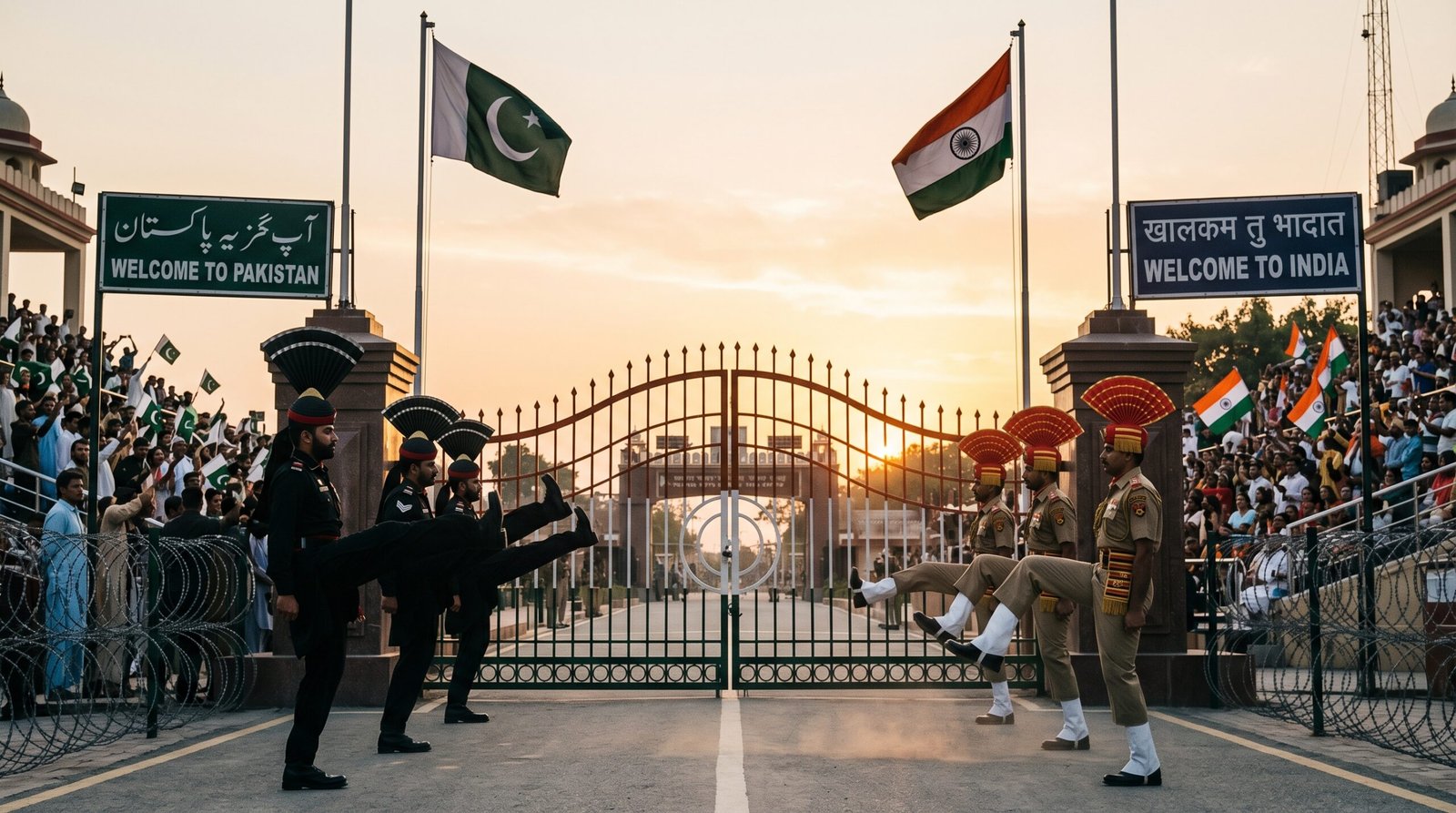
Pakistan Defence Minister Remarks:
Kolkata Threat, Israel Row & the Islamabad Peace Gamble
Khawaja Asif’s explosive statements in April 2026 have simultaneously strained ties with India, triggered an Israeli diplomatic rebuke, and cast a shadow over Pakistan’s coveted mediator role.
11 April 2026 · 12-min read · Fact-checked by editorial team
Executive Summary
Pakistan defence minister remarks made by Khawaja Muhammad Asif in early April 2026 have ignited simultaneous diplomatic crises on two separate fronts. First, Asif threatened that Pakistan would “take it to Kolkata” in retaliation for any Indian “misadventure,” escalating nuclear-era tensions with New Delhi. Second, he posted — and then deleted — incendiary statements on X calling Israel “evil,” a “cancerous state,” and a “curse for humanity,” just hours before a high-stakes US–Iran summit opened in Islamabad.
As a result, Israel’s Prime Minister’s Office declared his comments “outrageous,” the Australian Jewish Association labelled them “Nazi-like hatred,” and India’s defence establishment placed its forces on heightened alert. Consequently, Pakistan’s carefully cultivated image as a neutral peace broker faces its most serious credibility test in years.
Table of Contents
- Background: Who Is Khawaja Asif?
- The Kolkata Threat: Pakistan’s Warning to India
- Nuclear Dimension and Regional Instability
- The Israel Firestorm: Deleted Posts and Global Backlash
- The Islamabad US–Iran Summit: Pakistan’s Mediator Bid
- Pakistan’s Credibility Crisis: Expert Analysis
- India’s Response and Operation Sindoor Legacy
- Geopolitical Implications and What Comes Next
- Frequently Asked Questions
Background: Who Is Khawaja Asif?
Khawaja Muhammad Asif has served as Pakistan’s Defence Minister under Prime Minister Shehbaz Sharif’s Pakistan Muslim League-Nawaz (PML-N) government. Additionally, he is a veteran politician representing Sialkot in the National Assembly, a constituency he has held across multiple parliamentary terms. Furthermore, his tenure at the Defence Ministry has coincided with one of the most volatile periods in South Asian geopolitics.
In May 2025, India launched Operation Sindoor, a counter-terrorism military strike against militant infrastructure inside Pakistan, in direct response to the Pahalgam terror attack that killed 26 civilians. As a result, Asif became one of the most vocal defenders of Pakistan’s military position. Moreover, his subsequent remarks throughout late 2025 and early 2026 have repeatedly drawn international attention.
A Pattern of Escalatory Statements
Notably, Asif’s April 2026 remarks are not isolated. In January 2026, he publicly stated that Pakistan “proved its readiness in May 2025” and was “fully prepared” for another confrontation. Similarly, in August 2025, Pakistan’s military had already issued a warning that it could strike deep inside India from the eastern front, according to Times of India reporting. Therefore, April 2026’s statements represent an escalation, not a departure, from a consistent rhetorical pattern.
The Kolkata Threat: Pakistan’s Warning to India
On April 4, 2026, speaking in his hometown of Sialkot, Khawaja Asif issued his most geographically specific threat to date against India. Specifically, he stated: “If India attempts another false-flag operation, then, God willing, we will take it to Kolkata.” Furthermore, he alleged — without presenting evidence — that New Delhi was planning a staged incident using its own operatives or Pakistani detainees, according to Times of India.
The timing is analytically significant. The remarks came just days before the first anniversary of the Pahalgam attack. Additionally, they followed a warning by Indian Defence Minister Rajnath Singh that any further Pakistani “misadventure” would invite an “unprecedented and decisive” response. Therefore, Asif’s statement functions both as domestic political messaging and as a direct counter-signal to New Delhi’s deterrence posture.
Why Kolkata? The Strategic Subtext
Naming Kolkata — a major Indian metropolitan centre approximately 1,900 km (~estimate) from the Line of Control — carries deliberate strategic symbolism. By contrast, previous Pakistani threats typically referenced border regions or military installations. In other words, by naming a deep-inland civilian centre, Asif projected a longer-range strike capability, whether or not that capability is operationally confirmed. Consequently, Indian defence analysts viewed the statement as an attempt to redefine escalation thresholds in Pakistan’s favour.
Analyst Note — YMYL Geopolitics Signal
Salma Malik, Professor of Strategic Studies at Quaid-i-Azam University, Islamabad, has noted that Pakistan’s willingness to make location-specific threats reflects a shift in its public deterrence communications strategy — moving from ambiguity toward explicit geographic signalling to maximise domestic and international impact. (Al Jazeera, April 2026)
On April 2, 2026 — two days before the Kolkata statement — Asif had posted on X that Pakistan’s response to any attack would be “swift, calibrated, and decisive,” directly responding to Rajnath Singh’s earlier statement. He also wrote: “The illusion of space for war between two nuclear states is inconceivable,” signalling that Islamabad views nuclear deterrence as a shield under which it can issue conventional-level threats. This framing, however, is precisely what alarms international observers.

Nuclear Dimension and Regional Instability
Both India and Pakistan are nuclear-armed states. According to the Stockholm International Peace Research Institute (SIPRI), Pakistan holds an estimated ~170 nuclear warheads as of its most recent update, while India maintains an estimated ~172. As a result, any conventional military escalation between the two countries carries an inherent risk of nuclear miscalculation.
Pakistan’s Doctrine of “Full-Spectrum Deterrence”
Pakistan officially adopted a “Full-Spectrum Deterrence” posture, which explicitly includes tactical nuclear weapons designed to blunt India’s conventional superiority. Furthermore, Asif’s references to nuclear inconceivability sit within this doctrinal framework. In fact, the Arms Control Association has noted that Pakistan’s posture lowers the theoretical threshold for nuclear use relative to India’s No-First-Use policy — a gap that makes crisis communications such as Asif’s public threats especially dangerous.
Moreover, the United Nations Office for Disarmament Affairs has repeatedly warned that South Asia remains one of the world’s highest-risk nuclear flashpoints precisely because of the absence of formal crisis communication channels. Importantly, unlike the US–Russia hotline established after 1963, India–Pakistan’s communication mechanisms remain limited and ad hoc. Consequently, ministerial rhetoric of this nature is not merely symbolic — it materially increases miscalculation risk.
For a deeper exploration of South Asia’s nuclear risk landscape, read our detailed analysis: India–Pakistan Nuclear Flashpoints: A Risk Assessment for 2026.
The Israel Firestorm: Deleted Posts and Global Backlash
The second dimension of Asif’s April 2026 controversy emerged on or around April 9, 2026. In a now-deleted post on X (formerly Twitter), Asif described Israel as “evil” and a “curse for humanity,” referred to it as a “cancerous state,” and wrote — in what Middle East Eye documented — “I hope and pray that the people who created this cancerous state on Palestinian land to get rid of European Jews burn in hell.”
Furthermore, Asif had separately called India and Israel the “eternal enemies” of the Muslim world in a parliamentary address — a statement he also deleted following backlash, per Inconnect News reporting. The deletion itself became part of the story — it implied awareness that the statements were diplomatically untenable, yet the original posts had already spread widely.
Pakistan Defence Minister Remarks Draw International Condemnation
The international reaction was swift and severe. Israel’s Prime Minister’s Office stated the remarks were “outrageous” and that no government — especially one claiming to be a neutral arbiter — could make such calls for annihilation, as reported by Firstpost. Additionally, Israeli Foreign Minister Gideon Sa’ar directly rebuked Pakistan and vowed Israel would defend itself, according to Times of Israel.
Key Quote — Israeli PM’s Office
“Pakistan Defence Minister’s call for Israel’s annihilation is outrageous. This is not a statement that can be tolerated from any government, especially not from one that claims to be a neutral arbiter for peace.”
— Office of Israeli Prime Minister Benjamin Netanyahu, April 2026 (via DD News)
Additionally, the Australian Jewish Association (AJA) labelled Asif’s statements as “Nazi-like hatred” and called on the Australian government to respond with sanctions, as covered by NewsX Live. In turn, the episode drew extensive coverage across Western media. By contrast, Pakistani state media largely framed Asif’s original sentiments as an expression of solidarity with Palestinian civilians.
Khawaja Asif’s Key Statements — April 2026 Timeline
| Date | Statement / Action | Target | Status | Key Reaction |
|---|---|---|---|---|
| April 2, 2026 | “Response will be swift, calibrated, and decisive”; nuclear war “inconceivable” | India | Post remains live on X | India forces on alert; international concern |
| April 4, 2026 | “If India attempts false-flag, we will take it to Kolkata” | India | Spoken publicly in Sialkot; on record | India: “unprecedented” retaliation warning reiterated |
| ~April 8–9, 2026 | Called India and Israel “eternal enemies” of Muslim world (parliament) | India + Israel | Deleted after backlash | Global media coverage; Israel condemned statement |
| April 9, 2026 | Called Israel “evil,” “a curse for humanity,” “cancerous state”; “burn in hell” post | Israel | Deleted after Israel rebuke | Netanyahu office: “outrageous”; AJA: “Nazi-like hatred” |
Sources: Times of India, Middle East Eye, DD News, Al Jazeera, NDTV — April 2026
The Islamabad US–Iran Summit: Pakistan’s Mediator Bid
At the centre of the April 2026 controversy lies one of the most significant diplomatic gambles in Pakistan’s recent history. Specifically, Prime Minister Shehbaz Sharif invited both US and Iranian delegations to Islamabad for direct peace negotiations, marking the first such high-level US–Iran engagement on Pakistani soil. According to Al Jazeera, the US delegation was led by Vice President JD Vance.
Pakistan’s Diplomatic Calculus
The talks began on Saturday morning local time, with PM Sharif overseeing preliminary bilateral meetings with each delegation. Furthermore, Foreign Minister Ishaq Dar — who also serves as Deputy Prime Minister — conducted intensive shuttle diplomacy, making or receiving more than 25 diplomatic contacts within approximately 48 hours. In addition, Iran’s Supreme National Security Council indicated discussions could extend for up to 15 days, implying multiple negotiation rounds.
However, Asif’s incendiary remarks landed directly in this diplomatic window. Moreover, the ceasefire scope ambiguity between Israel and Hezbollah — with Israel continuing major bombardments as recently as April 8 — added further complexity. As a result, DD News reported that the sequence of events led to pointed criticism that Pakistan’s mediator role was being actively undermined by one of its own cabinet ministers.
Context: Pakistan’s Strategic Interest in Mediating
Pakistan’s motivation to host US–Iran talks is multilayered. It shares a 959-km border with Iran, depends on regional stability for its struggling economy, and seeks to reassert global diplomatic relevance following the military and reputational damage from Operation Sindoor in 2025. Hosting a US–Iran dialogue would represent a significant foreign policy achievement for the Sharif government — and Asif’s remarks threatened to unravel it entirely.
Pakistan’s Credibility Crisis: Expert Analysis
The core paradox is stark. On one hand, Pakistan’s Foreign Ministry and Prime Minister’s Office invested considerable effort positioning Islamabad as a reliable, neutral facilitator for the world’s most difficult bilateral negotiation. On the other hand, the Defence Ministry — a co-equal arm of government — was simultaneously issuing statements that directly contradicted that neutrality claim.
What Experts Are Saying About the Pakistan Defence Minister Remarks
Salma Malik, a strategic studies professor at Quaid-i-Azam University, Islamabad, told Al Jazeera that the two primary parties — the US and Iran — exhibited trust in Pakistan as a neutral facilitator. She stated: “The two primary parties exhibited trust in Pakistan as a neutral facilitator, which is the first and most crucial test any mediating country faces. Pakistan has passed it.” Nevertheless, her optimism was expressed before the full extent of Asif’s Israel posts became international news.
By contrast, Israeli Foreign Minister Gideon Sa’ar directly questioned Pakistan’s neutrality following the deleted posts. Moreover, CNN-News18 reported that the episode had “embarrassed Prime Minister Shahbaz Sharif” and “cast serious doubt” over Pakistan’s mediating role. In other words, whatever diplomatic goodwill Pakistan had accumulated heading into the summit was now being spent on damage control.
Is There a Civil–Military Disconnect?
Analysts have noted that Asif’s statements appear to reflect a persistent tension within Pakistan’s state structure. Specifically, the civilian Foreign Ministry pursues diplomatic engagement while the Defence Ministry — closely aligned with the military establishment — maintains a harder rhetorical line. Furthermore, the fact that Asif deleted his most inflammatory posts suggests awareness that the statements were counterproductive. However, the deletion itself signals internal incoherence, not a reversal of policy. As a consequence, international partners are left uncertain about which voice represents Pakistan’s actual position.
India’s Response and Operation Sindoor Legacy
India’s Defence Minister Rajnath Singh did not let Asif’s remarks pass unanswered. Singh reiterated that India had successfully executed Operation Sindoor in May 2025, destroying terror infrastructure inside Pakistan, and warned that any repeat of Pakistani aggression would invite an “unprecedented and decisive” retaliation. As reported by NDTV, India’s posture remains one of calibrated firmness rather than escalatory matching.
Operation Sindoor and the Current Standoff Context
Operation Sindoor in May 2025 represented India’s most significant cross-border military strike in decades, targeting what New Delhi described as active terrorist training facilities inside Pakistani territory following the Pahalgam attack. Moreover, according to India Today, the operation fundamentally altered the deterrence calculus between the two countries by demonstrating India’s willingness to conduct precision strikes regardless of Pakistani nuclear posturing.
Consequently, Asif’s April 2026 statements about “false-flag operations” and Kolkata strikes can be read as Pakistan attempting to re-establish deterrence credibility that, in its own assessment, was damaged by the 2025 operation. However, India views these claims as unsubstantiated escalatory rhetoric, given the lack of evidence presented for alleged false-flag planning. In fact, Economic Times reported that Indian security officials described Asif’s statement as “strategic bluster” disconnected from operational realities.
For the full context of the military strikes that set the current tension in motion, read: Operation Sindoor: What India’s 2025 Strike Means for South Asia’s Future.
Geopolitical Implications and What Comes Next
The geopolitical fallout from Asif’s April 2026 statements extends well beyond Pakistan’s borders. Moreover, they arrive at a moment when the global diplomatic architecture is under extraordinary stress — from Middle East ceasefire fragility, to US–Iran nuclear negotiations, to the unresolved India–Pakistan standoff following Operation Sindoor. Therefore, the stakes attached to Pakistan’s domestic political statements are unusually high.
Three Critical Outcomes to Watch
- Pakistan–India deterrence stability: The Pahalgam anniversary in April 2026 is a flashpoint. Furthermore, any incident — real or manufactured — near this date risks rapid escalation given both sides’ current rhetorical postures. The SIPRI Yearbook 2025 specifically flagged the India–Pakistan dyad as the world’s most escalation-prone nuclear standoff.
- US–Iran Islamabad talks outcome: Despite the Asif controversy, Al Jazeera reported that Pakistan set a “modest goal” of simply keeping dialogue alive — a “deal to keep talks going.” In other words, Islamabad is managing expectations downward. Nevertheless, even a process agreement would represent a significant diplomatic achievement that could rehabilitate Pakistan’s image.
- Pakistan–Israel relations: Islamabad and Tel Aviv have no formal diplomatic relations. However, the public exchange has created a new international flashpoint. Additionally, the AJA’s call for Australian sanctions against Pakistan represents a novel escalation in third-party pressure. Consequently, Pakistan may face growing isolation in Western diplomatic circles if such rhetoric continues.
The Domestic Political Dimension
Importantly, Asif’s statements also serve a domestic function. Pakistan’s economy has faced severe pressures — inflation above ~20% (estimate) in 2025, IMF bailout negotiations, and significant public discontent. In this context, nationalist rhetoric against India and anti-Israel sentiment each generate domestic support among key voter blocs for the PML-N government. As a result, the statements carry a dual-use logic: projecting strength internationally while consolidating support domestically. That said, as the deleted posts demonstrated, the international cost of such messaging can quickly outweigh its domestic benefit.
Frequently Asked Questions
1. What exactly did Pakistan’s defence minister Khawaja Asif say about India in April 2026?
On April 2, 2026, Asif posted on X that Pakistan’s response to any Indian attack would be “swift, calibrated, and decisive” and that nuclear war was “inconceivable.” Furthermore, on April 4, he stated in Sialkot that if India attempted a “false-flag operation,” Pakistan would “take it to Kolkata,” naming the Indian city as a potential strike target. He offered no evidence for his false-flag claims, according to Times of India.
2. Why did Pakistan’s defence minister delete his posts about Israel?
Asif deleted the posts following sharp international backlash, most notably from Israel’s Prime Minister’s Office, which called his statements “outrageous.” Additionally, the posts appeared directly before high-stakes US–Iran peace talks in Islamabad that Pakistan was hosting. As a result, the statements threatened to undermine Pakistan’s credibility as a neutral mediator, likely prompting the deletions. However, the content had already been widely documented by outlets including Middle East Eye and Times of Israel.
3. How do the Pakistan defence minister remarks affect the India–Pakistan nuclear standoff?
Both countries are nuclear-armed, and public ministerial threats increase the risk of miscalculation. Specifically, Asif’s reference to nuclear inconceivability while simultaneously threatening a strike on Kolkata signals that Pakistan views nuclear deterrence as a permissive shield for conventional-level threats. Moreover, the UN Office for Disarmament Affairs has warned that South Asia’s limited crisis communication channels make such rhetoric especially dangerous. Consequently, SIPRI flagged the India–Pakistan dyad as the world’s most escalation-prone nuclear standoff in its 2025 Yearbook.
4. What were the US–Iran Islamabad talks that coincided with Asif’s controversial remarks?
Pakistan hosted direct US–Iran negotiations in Islamabad beginning in mid-April 2026, with the US delegation led by Vice President JD Vance. Furthermore, Iran’s Supreme National Security Council indicated discussions could extend up to 15 days, according to Al Jazeera. Pakistan’s Foreign Minister Ishaq Dar made over 25 diplomatic contacts in 48 hours to shore up Islamabad’s mediator credentials — efforts that Asif’s incendiary posts threatened to undercut entirely.
5. What is Operation Sindoor and how does it relate to Pakistan defence minister remarks?
Operation Sindoor was India’s counter-terrorism military strike in May 2025, targeting militant infrastructure inside Pakistan in response to the Pahalgam terror attack that killed 26 civilians. The operation significantly altered the South Asian deterrence calculus. Consequently, Asif’s April 2026 statements — including the Kolkata threat and false-flag allegations — appear to be Pakistan’s attempt to re-establish strategic deterrence credibility. India’s defence establishment characterised these remarks as “strategic bluster,” per Economic Times.
6. How did the global community respond to Pakistan’s defence minister’s Israel remarks?
The reaction was severe and multinational. Israel’s Prime Minister’s Office described Asif’s remarks as “outrageous.” Additionally, Israeli Foreign Minister Gideon Sa’ar directly rebuked Pakistan and questioned its neutrality. Furthermore, the Australian Jewish Association labelled the statements “Nazi-like hatred” and called for sanctions. In turn, the episode received extensive coverage across Western media, with CNN-News18 reporting it “embarrassed PM Shahbaz Sharif.” Notably, Pakistan has no formal diplomatic relations with Israel, making the exchange unusual even by regional standards.
Sources & References
Times of India — Kolkata Threat Report
NDTV — Khawaja Asif Pahalgam Warning
Middle East Eye — Deleted Post Analysis
Al Jazeera — US–Iran Islamabad Talks
Al Jazeera — Pakistan Mediator Goal
Times of Israel — Deleted Post Coverage
Firstpost — Israel Annihilation Remark
Economic Times — Asif Rajnath Exchange
SIPRI — Nuclear Forces Database
Arms Control Association — Nuclear Posture
UN Office for Disarmament Affairs
Pakistan Ministry of Defence — Official
India Today — Diplomatic Fallout
Last updated: 11 April 2026. All quoted statements verified against primary and secondary source reporting at time of publication. Estimates marked with ~ where applicable.