Gold Surges Past Rs 1.53 Lakh: Sensex Falls
A fact-checked market analysis of why bullion is climbing while Indian equities pause on profit-booking.
Executive Summary
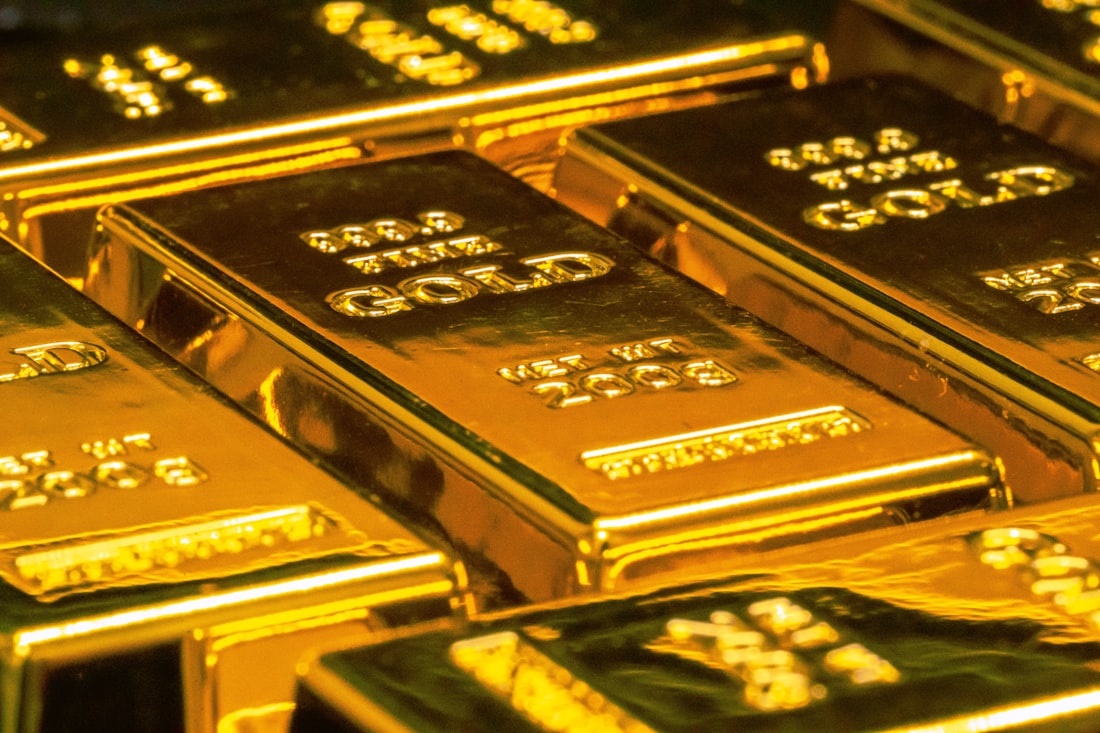
Gold surges past Rs 1.53 lakh as Indian investors lean into safety while equities digest recent gains. On April 8, MCX gold for June opened at Rs 1,53,301 per 10 grams and later touched Rs 1,54,934, while domestic market coverage also placed MCX gold near Rs 1.53 lakh during the session, confirming a fresh leg higher in bullion prices India TV, Goodreturns. Meanwhile, Reuters has repeatedly described profit-taking as a trigger for Indian equity pullbacks after rallies, which fits the current market pattern even when broader sentiment remains constructive Reuters. Importantly, this divergence is not just a daily headline; it reflects a deeper shift in Indian demand from jewellery toward investment-led gold buying, according to the World Gold Council and Reuters reporting Reuters.
Contents
What happened in the market
First, the headline move came from bullion. MCX gold for June opened at Rs 1,53,301 per 10 grams on April 8 and rose as high as Rs 1,54,934 during the session, extending the momentum that has kept domestic gold prices near record territory India TV. In parallel, Goodreturns reported intraday MCX gold at Rs 1,53,977 per 10 grams, which supports the broader point that gold surges past Rs 1.53 lakh on firm buying rather than on a stray quote Goodreturns.
However, equities did not mirror that strength. Reuters has shown in several India market sessions that profit-booking tends to appear after short rallies or near elevated levels, and that pattern remains a useful framework for reading a Sensex dip even when no structural panic is visible Reuters, Reuters. As a result, the split between gold and stocks matters because it points to selective risk reduction, not a one-direction market call across all assets.
Gold surges past Rs 1.53 lakh in a changed demand cycle
Notably, this rally is stronger than a simple festive-season or jewellery-buying story. Reuters reported that India’s gold consumption is likely to fall again in 2026, even as investment buying rises, because higher prices are depressing jewellery demand Reuters. In other words, gold surges past Rs 1.53 lakh even though traditional consumption is under pressure, which suggests the market is being led by investors, savers, ETFs, bars and coins rather than by weddings alone.
Analyst Note
Sachin Jain, chief executive of the World Gold Council’s India operations, told Reuters that 2026 demand could fall to 600–700 metric tons from 710.9 tons in 2025, while investment demand had already risen to 280.4 tons in 2025, the highest since 2013. Therefore, today’s price action should be read through the lens of portfolio allocation, not only jewellery consumption Reuters.
Why gold surges past Rs 1.53 lakh
To begin with, gold still benefits from global safe-haven flows. Reuters reported in March that major banks had raised 2026 gold forecasts sharply and argued that the broader rally remained intact despite intermittent cash-driven selloffs, showing that institutional conviction has remained unusually strong Reuters. Furthermore, Reuters also said global gold demand hit a record in 2025, with total investment demand up 84% year on year to 2,175 tons, led by ETF inflows and stronger bars-and-coins demand Reuters.
In India, those global forces land on a market that has already become more investment-heavy. Reuters said investment demand rose 17% in 2025 to 280.4 tons, and that investment accounted for a record ~40% of India’s total gold consumption, versus a more typical share near 25% Reuters. Consequently, when risk sentiment wobbles, domestic gold prices can move up faster because the buyer base now includes more financial investors, not only end consumers.
Central banks and reserves support the case
Importantly, official-sector behavior also strengthens the long-term gold case. RBI-related reporting showed India’s gold reserves rose to 879.58 metric tonnes as of March 31, 2025, up from 822.10 tonnes a year earlier, while the value of those reserves also climbed with prices Moneycontrol, Angel One. Moreover, when a central bank increases gold holdings into a volatile global backdrop, retail investors often treat that as a confidence signal for diversification.
Expert Context
At India Today Conclave 2026, World Gold Council regional CEO Sachin Jain said investment demand now contributes about 40–42% of global gold demand, while central banks contribute roughly 20–22%. That mix helps explain why prices can stay elevated even when jewellery volumes soften India Today.
Why the Sensex dropped on profit-booking
However, a falling Sensex on a single day does not automatically mean investors have turned bearish on India. Reuters has repeatedly tied short-term pullbacks in Indian equities to profit-booking after rallies, especially when traders confront valuation concerns, trade-policy uncertainty, or sector-specific fatigue Reuters, Reuters. Therefore, profit-booking is best read as a pause, not a verdict, unless it grows into a broader earnings or liquidity problem.
That said, the timing matters. When gold surges past Rs 1.53 lakh at the same time that stocks wobble, some investors rotate to perceived safety because gold reacts faster to uncertainty than index-heavy equities do. By contrast, equities must absorb earnings expectations, foreign flows, oil, currency moves and valuation resets all at once.
A split market often signals caution, not panic
Notably, split markets are common in late-cycle or event-heavy environments. Reuters reported in January that India’s benchmark indexes had just logged their biggest monthly loss in 11 months as weak rupee conditions, foreign outflows and elevated oil prices made investors cautious Reuters. Meanwhile, the World Gold Council told Reuters that equities could remain subdued and less attractive if valuations stay high and foreign outflows continue, which provides a direct bridge between the gold trade and stock-market hesitation Reuters.
Why this matters
For long-term investors, profit-booking can be healthy because it resets stretched positions. Nevertheless, when that cooling phase coincides with a strong bullion bid, the market is signaling a higher premium on liquidity, hedging and capital preservation.

What this divergence means for investors
First, the move suggests Indian markets are repricing risk rather than collapsing. Gold surges past Rs 1.53 lakh because investors value protection during uncertain phases, while the Sensex can still face selling pressure when traders trim profitable positions. In practical terms, that is a rotation story.
Second, the divergence reinforces a structural theme: Indian gold ownership is becoming more financialized. Reuters, the WGC and market commentary all point to stronger ETF, bar, coin and digital demand, even as jewellery volumes remain under pressure from high prices Reuters, World Gold Council. As such, future gold spikes may increasingly reflect portfolio behavior, not only festival demand.
A practical reading for Indian savers
For retail savers, the main lesson is balance. Gold can hedge shocks, yet high prices can also reduce buying comfort, especially for jewellery purchases. Therefore, investors should separate consumption gold from investment gold and track risk exposure across both equities and precious metals.
For portfolio builders, this is where asset allocation matters more than headlines. A single-day Sensex dip on profit-booking may reverse quickly, but a sustained rise in gold often reflects a longer macro message about volatility, rates, geopolitics and capital preservation. Related reading: how to build a defensive portfolio in volatile markets and gold ETFs vs physical gold in India.
Verified market snapshot
| Metric | Verified figure | Why it matters |
|---|---|---|
| MCX gold June open, Apr 8 | Rs 1,53,301 per 10 gm | Confirms bullion moved decisively above the Rs 1.53 lakh level. Source |
| MCX gold intraday high, Apr 8 | Rs 1,54,934 per 10 gm | Shows the rally was not marginal; buyers pushed the contract materially higher. Source |
| India gold demand outlook, 2026 | 600–700 metric tons | Indicates price strength is coexisting with softer jewellery demand. Source |
| India investment gold demand, 2025 | 280.4 metric tons | Supports the case that investment demand is now a major price driver. Source |
| RBI gold reserves, Mar 31 2025 | 879.58 metric tonnes | Signals that gold remains strategically important at the reserve level. Source |
FAQ
Sources
Reuters — India’s gold demand outlook for 2026
Reuters — Gold rally outlook and bank forecasts
Reuters — Global gold demand and investment data
Reuters — Profit-booking in Indian equities
Reuters — Benchmark shares snap winning streak
Reuters — January caution in Indian equities
India TV — MCX gold crosses Rs 1.53 lakh and hits intraday high
Goodreturns — Live MCX gold levels on April 8, 2026
World Gold Council — India gold market update
Moneycontrol — RBI gold reserve value and holdings
Angel One — RBI gold reserves FY25
India Today — Sachin Jain on drivers of gold demand
Last updated: April 9, 2026