Artemis 2 Mission: History Made Around the Moon — and What Comes Next
NASA’s first crewed lunar mission in 54 years splashed down successfully on April 10, 2026 — breaking every human distance record set since 1970.
April 11, 2026 · 14-min read · Fact-checked against NASA official sources
The Artemis 2 mission — NASA’s first crewed deep-space flight in more than half a century — launched April 1, 2026, and splashed down safely on April 10, completing a 10-day journey around the Moon. Commander Reid Wiseman, Pilot Victor Glover, Mission Specialist Christina Koch, and CSA astronaut Jeremy Hansen flew aboard the Orion spacecraft, lifted by the SLS (Space Launch System) rocket generating 8.8 million pounds of thrust at liftoff. Moreover, the crew set an all-time human spaceflight distance record, reaching 252,756 miles from Earth — surpassing Apollo 13’s 56-year-old mark of 248,655 miles. In addition to the historic flyby, the mission served as a critical systems-validation test for Orion’s life support, manual piloting, and deep-space health monitoring, directly paving the path toward an Artemis IV lunar landing currently targeted for 2028.
Mission Overview: The Artemis 2 Journey
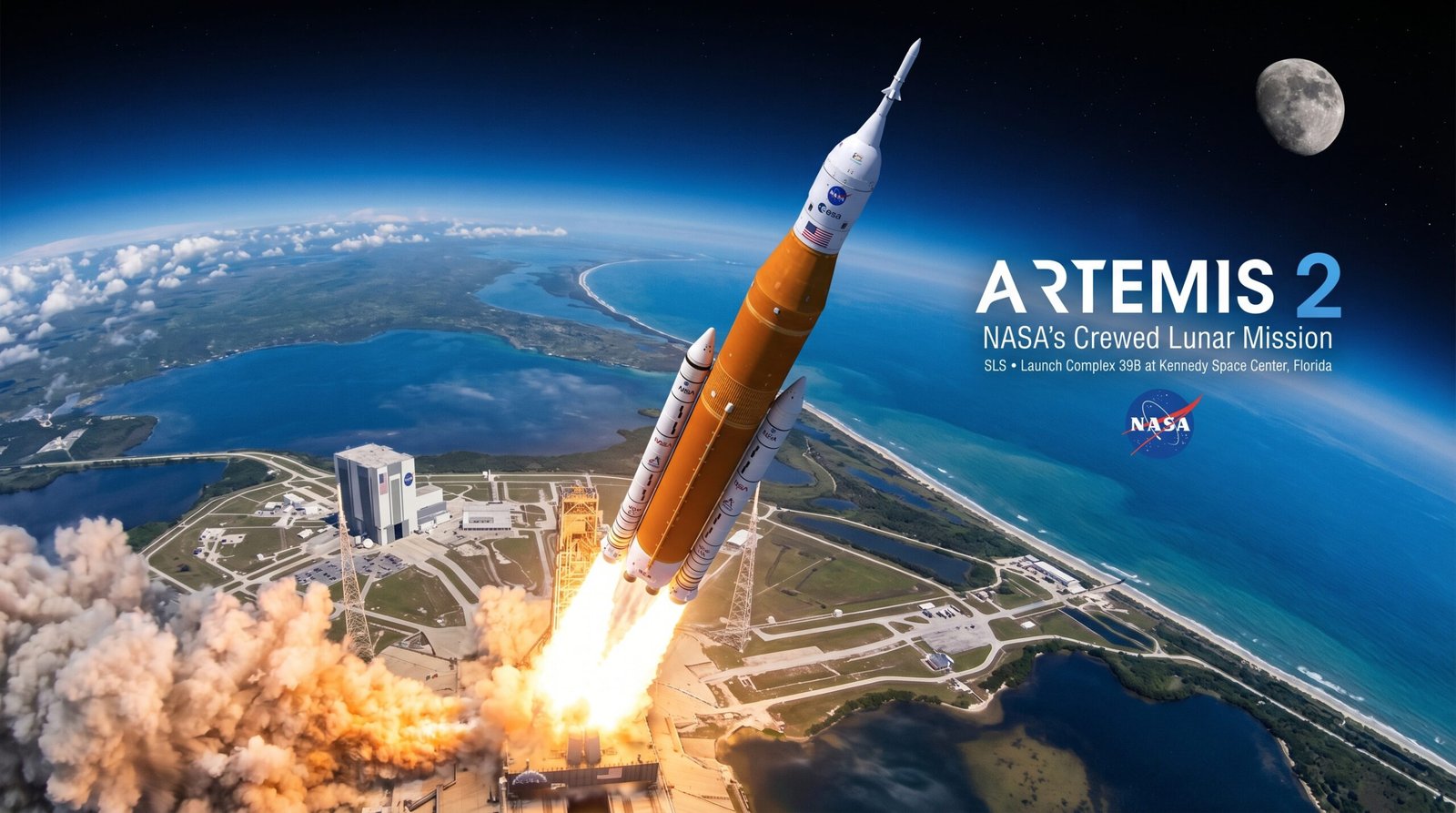
The Artemis 2 mission officially became humanity’s first crewed return to the vicinity of the Moon since Apollo 17 in December 1972. Liftoff took place at 6:35 p.m. EDT on April 1, 2026, from Launch Pad 39B at NASA’s Kennedy Space Center in Florida. Furthermore, the mission marked the first time the Space Launch System rocket carried humans into space, delivering the Orion crew capsule to orbit with what NASA described as “pinpoint accuracy.”
The mission profile followed a free-return trajectory — a path that uses the Moon’s gravity to slingshot the spacecraft back toward Earth without requiring a major engine burn. As a result, Orion looped around the far side of the Moon before heading home. Notably, the trajectory was deliberately chosen to maximise mission safety: even a complete propulsion failure after trans-lunar injection would still return the crew to Earth.
Key Mission Objectives
Artemis 2 was, above all, a test flight. However, it was far from a simple shakedown cruise. NASA outlined several primary objectives:
Life Support Validation: First crewed test of Orion’s Environmental Control and Life Support System (ECLSS) in deep space.
Manual Piloting Test: Commander Wiseman and Pilot Glover evaluated manual piloting capabilities during a detailed flight test objective on Flight Day 2.
Lunar Imaging: Crew conducted planned lunar imaging during the flyby for scientific and navigational calibration.
Human Health Research: Multiple biomedical experiments collected baseline deep-space health data for the first time with humans beyond low Earth orbit.
Communication Systems: Tested spacecraft-to-ground communications at maximum lunar distances, including a planned ~40-minute communication blackout during far-side transit.
What distinguishes Artemis 2 from a symbolic moonshot is its data-first philosophy. Specifically, every system — from ablative heat shield tiles to EVA suit interfaces — was validated under real deep-space conditions. Consequently, NASA now holds empirical performance baselines that no simulation or Earth-orbit test could have provided. This operational data is, in effect, the mission’s most important scientific output.
Meet the Artemis 2 Crew
Four astronauts made history aboard the Artemis 2 mission — each carrying a distinct significance. Together, they represent the most symbolically charged crew since the Apollo era, and individually they bring combined expertise in military aviation, engineering, research science, and international cooperation.
| Astronaut | Role | Agency | Notable Distinction |
|---|---|---|---|
| Reid Wiseman | Commander | NASA | Former Chief of the Astronaut Office; led crew training for Artemis II |
| Victor Glover | Pilot | NASA | First Black astronaut on a lunar-bound spacecraft |
| Christina Koch | Mission Specialist | NASA | First woman to travel to lunar orbit; holds record for longest single spaceflight by a woman |
| Jeremy Hansen | Mission Specialist | CSA (Canada) | First non-American ever to travel beyond low Earth orbit |
Voices from Deep Space
Perhaps the mission’s most moving moments came not from telemetry, but from the crew’s own words. Pilot Victor Glover, speaking near the point of maximum lunar distance on April 6, delivered a reflection that resonated globally: “As we get close to the nearest point to the Moon and the farthest point from Earth and continue to unlock the mysteries of the cosmos, I would like to remind you of one of the most important mysteries on Earth, and that’s love.” [USA Today]
Meanwhile, Commander Wiseman made a deeply personal gesture. His three crewmates — in a surprise act of solidarity planned during pre-launch quarantine — secretly arranged to name a lunar crater “Carroll” in memory of Wiseman’s late wife. [SpaceQ] In addition, Jeremy Hansen became the first non-American to venture beyond low Earth orbit, representing a milestone for international spaceflight cooperation.
“The perspective I launched with was that we live on a fragile planet in the vacuum and the void of space. Our purpose on the planet as humans is to find joy… When you see it from out here, it doesn’t change it. It just absolutely reaffirms that.” — Victor Glover, Pilot, Artemis 2 [SpaceQ]
SLS Rocket and Orion Spacecraft
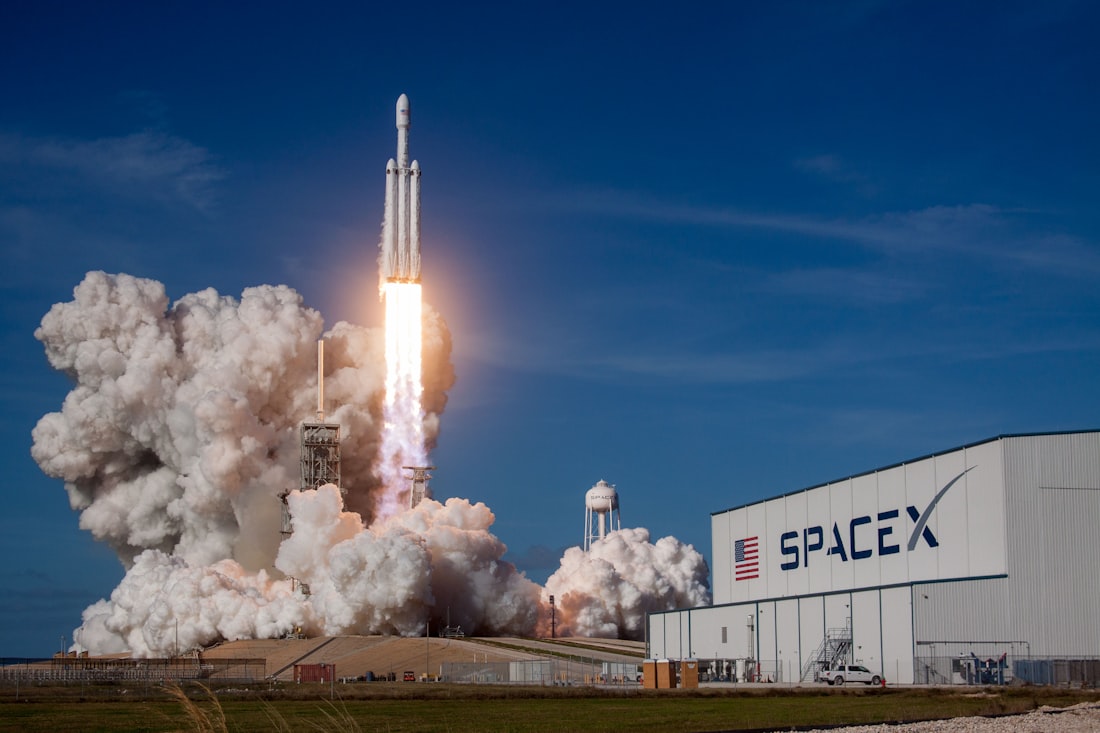
The Artemis 2 mission rode into space on the Space Launch System (SLS), now the most powerful rocket ever to carry humans. According to Wikipedia’s Space Launch System article, SLS generates 39 meganewtons (~8.8 million pounds-force) of thrust at liftoff. Furthermore, the SLS Block 1 configuration includes a core stage powered by four RS-25 engines, holding over 2.7 million litres of liquid hydrogen and liquid oxygen, with two solid rocket boosters providing more than 75% of thrust during the first two minutes of flight. [Canadian Space Agency]
Orion: A Spacecraft Built for Deep Space
The Orion Multi-Purpose Crew Vehicle (MPCV) is a partially reusable crewed spacecraft purpose-built for lunar-distance travel. After separation from SLS, Orion carries a mass of approximately 26,375 kg (58,147 lb) and can perform manoeuvres requiring up to 1,050 m/s of delta-v. In addition, for Artemis 2 specifically, Orion’s European Service Module provided the trans-lunar injection burn — accelerating the spacecraft from Earth orbit onto its trajectory toward the Moon.
Unlike the Apollo Command Module, Orion is designed from the outset for repeated deep-space missions. Moreover, its life support system — tested with crew for the first time on this Artemis 2 mission — must sustain four humans for up to 21 days without resupply. Consequently, this test validated the most critical safety system for all future crewed Artemis flights.
No other rocket currently in service can send a crew and spacecraft directly to the Moon in a single mission. SLS Block 1 carries 27 metric tonnes to trans-lunar injection — a payload capacity no other active rocket matches. [Wikipedia] Additionally, SLS became only the second rocket in history — after Saturn V — to carry humans beyond low Earth orbit.
Breaking the Distance Record: How Far Did Artemis 2 Fly?
At 12:56 p.m. CDT on April 6, 2026, the Artemis 2 crew crossed 248,655 miles from Earth — eclipsing a record set by Apollo 13 astronauts Jim Lovell, Jack Swigert, and Fred Haise in April 1970. [NASA] Notably, that Apollo 13 record had stood for 56 years without being broken. Furthermore, the Artemis 2 crew continued beyond that point, reaching a peak distance of approximately 252,756 miles before looping back toward Earth.
A Record Built on a Tragedy
The context around the old record adds weight to the new one. Apollo 13 reached its maximum distance because of an emergency — an oxygen tank explosion forced the crew to abandon the lunar landing and use a free-return trajectory to survive. In contrast, the Artemis 2 crew reached their record distance as a planned and celebrated milestone on a healthy spacecraft. CSA astronaut Jeremy Hansen, speaking from deep space, said: “From the cabin of Integrity here, as we surpass the furthest distance humans have ever traveled from planet Earth, we do so in honoring the extraordinary efforts and feats of our predecessors in human space exploration.” [NASA Instagram]
For ~40 minutes during the far-side transit, the crew experienced a complete communication blackout with Earth. As a result, they observed portions of the Moon no humans had ever viewed up close. Mission Specialist Christina Koch later described sending a message to Earth upon re-establishing contact: “To Asia, Africa, and Oceania — we are looking back at you, we hear you can look up and see the Moon right now, we see you too.” [NASA Instagram]
Science and Human Health Research on Artemis 2
Beyond navigation and engineering, the Artemis 2 mission served as an unprecedented living laboratory. According to NASA’s Standard Measures reference page, the Spaceflight Standard Measures experiment — which has collected data from more than 30 astronauts since 2018 — added a new deep-space branch with Artemis 2. Additionally, scientists collected blood, saliva, and urine samples to examine cardiovascular health, nutritional status, and immunological function in an environment no human has inhabited since 1972.
ARCHeR: Monitoring the Mind Beyond the Moon
One of the most innovative experiments aboard was ARCHeR (Artemis Research for Crew Health and Readiness). According to Gizmodo’s deep-space health report, ARCHeR investigated how deep-space conditions affect sleep, stress, cognition, and teamwork — using wristbands that continuously monitored crew movement and sleep throughout the mission. In addition, crew members wore these bands during all flight phases, providing real-time health monitoring data to mission control on Earth.
Equally significant were the “bone marrow chip” experiments. NASA researchers created personalised organ-on-a-chip devices from each astronaut’s own bone marrow stem cells. Flying these chips alongside the astronauts enabled scientists to directly compare molecular changes in the chips to changes in the crew’s actual bone marrow, as reported by Gizmodo. Consequently, this represents the first time bone marrow proxy data and real-time human bone marrow data have been simultaneously collected in the deep-space radiation environment.
Dormant Virus Reactivation and Radiation Risk
The Canadian Space Agency confirmed that scientists examined whether dormant viruses — including those that cause chickenpox and shingles — reactivate in the deep-space environment. Previous ISS research demonstrated virus reactivation in low Earth orbit. However, the Artemis 2 mission exposed crew to significantly higher galactic cosmic ray radiation than on the ISS, making this comparison scientifically critical for future long-duration missions to the Moon and Mars.
NASA life sciences researcher Dr. Sara Platts stated: “It’s just amazing how many things we’re going to be able to find out just from this one mission.” Specifically, she referenced the multi-system data capture — spanning cardiovascular, neurological, musculoskeletal, immunological, and behavioural domains — that no single spaceflight mission had previously attempted at deep-space distances. [Gizmodo]
For a broader look at NASA’s entire Artemis programme and its objectives, see our guide: The Complete Artemis Programme Explained.
Re-entry and Splashdown: Artemis 2 Comes Home
The most dangerous phase of any crewed lunar mission is re-entry. Orion entered Earth’s atmosphere at approximately 25,000 mph, and crew described the experience as “riding a fireball through the atmosphere.” [Times of India] Additionally, Orion executed three return trajectory correction burns in the final 24 hours of flight to precisely align with the splashdown zone.
Splashdown occurred at 5:07 p.m. PDT (8:07 p.m. EDT) in the Pacific Ocean off the coast of San Diego, California, on Friday, April 10, 2026. [NASA] NASA described the landing as nominal across all systems. Furthermore, recovery crews immediately began post-splashdown health assessments of the four crew members.
Post-Landing Data Collection
Notably, the science did not stop at splashdown. According to the Canadian Space Agency, data collection protocols continued for one month after the crew’s return. Specifically, post-landing tests included assessments of head, eye and body movements, functional performance tasks, vestibular function checks, and simulated moonwalk activities. As a result, this post-return data will directly inform crew readiness protocols for Artemis III and IV.
The Road Ahead: What Artemis 3 and 4 Mean for Human Spaceflight
The success of the Artemis 2 mission directly reshapes the timeline for humanity’s return to the lunar surface. According to a February 2026 NASA architecture update, Artemis III — now scheduled for mid-2027 — will not attempt a lunar landing. Instead, it will focus on rendezvous and docking operations in Earth orbit with commercial landers from SpaceX (Starship HLS) and Blue Origin (Blue Moon). Moreover, it will test the Axiom Extravehicular Mobility Unit (AxEMU) spacesuit in preparation for surface operations.
Artemis IV: The First Lunar Landing Since 1972
The first lunar landing under the Artemis programme is now officially targeted for Artemis IV in 2028. [Wikipedia: Artemis Program] Consequently, NASA’s strategic pivot adds an additional mission (Artemis III) to de-risk the programme — a lesson clearly drawn from the Apollo 1 fire and Challenger disasters. By extension, Artemis III functions similarly to Apollo 9 in the original Moon landing programme: a critical systems checkout before committing crew to the lunar surface.
SpaceX’s Starship HLS and Blue Origin’s Blue Moon represent the two contracted Human Landing System (HLS) vehicles that will carry crew from lunar orbit to the surface. The Artemis 2 mission’s data — particularly Orion life support validation, manual piloting performance, and deep-space communications — directly informs how and when those landing systems can be safely used with humans aboard.
Artemis vs Apollo: A Strategic Comparison
| Dimension | Apollo Programme | Artemis Programme |
|---|---|---|
| First crewed flyby | Apollo 8 (Dec 1968) | Artemis 2 (Apr 2026) |
| First crewed landing | Apollo 11 (Jul 1969) | Artemis 4 (targeted 2028) |
| Landing system | NASA Lunar Module (govt-built) | SpaceX Starship HLS / Blue Moon (commercial) |
| International partners | US-only crewed missions | CSA, ESA, JAXA |
| Crew diversity | All-male, all-American crews | First woman and first non-American beyond LEO on Artemis 2 |
| Spacecraft reusability | Single-use Command Module | Partially reusable Orion MPCV |
For a detailed look at the commercial landers being developed for Artemis IV, read: SpaceX Starship HLS vs Blue Moon: NASA’s Lunar Lander Race.
Frequently Asked Questions About the Artemis 2 Mission
What was the primary objective of the Artemis 2 mission?
The Artemis 2 mission was fundamentally a crewed test flight, not a lunar landing. Its primary objective was to validate the Orion spacecraft’s life support systems with humans aboard for the first time, test manual piloting capabilities at deep-space distances, and evaluate communications and navigation systems during a 10-day free-return trajectory around the Moon. Furthermore, multiple human health research experiments ran throughout the mission to gather baseline data for future long-duration deep-space missions.
Did the Artemis 2 mission land on the Moon?
No — the Artemis 2 mission did not land on the Moon. The mission followed a free-return trajectory that flew the crew around the Moon and returned them directly to Earth. In contrast, the first crewed lunar landing under the Artemis programme is targeted for Artemis IV, currently scheduled for 2028. Additionally, the intermediate Artemis III mission (mid-2027) will test docking between Orion and commercial landers in Earth orbit, as confirmed by NASA’s February 2026 architecture update.
How far did the Artemis 2 mission travel from Earth?
The Artemis 2 mission reached a maximum distance of approximately 252,756 miles (~406,780 km) from Earth — a new human spaceflight record. [NASA] Moreover, this surpassed the previous record of 248,655 miles set by the Apollo 13 crew in 1970 during their emergency return from a failed Moon landing attempt. The record had stood for 56 years before Artemis 2 eclipsed it on April 6, 2026.
Who were the Artemis 2 mission crew members?
The four crew members were: Commander Reid Wiseman (NASA), Pilot Victor Glover (NASA), Mission Specialist Christina Koch (NASA), and Mission Specialist Jeremy Hansen (Canadian Space Agency). Notably, Victor Glover became the first Black astronaut to travel on a lunar-bound spacecraft, Christina Koch became the first woman to reach lunar orbit, and Jeremy Hansen became the first non-American ever to travel beyond low Earth orbit. [Canadian Press / Yahoo News]
What rocket powered the Artemis 2 mission launch?
The Artemis 2 mission launched aboard NASA’s SLS (Space Launch System) rocket in Block 1 configuration, generating 8.8 million pounds of thrust at liftoff. Consequently, SLS became the second rocket in history — after Saturn V — to carry humans beyond low Earth orbit. [Wikipedia] Furthermore, the core stage holds over 2.7 million litres of propellant, with two solid rocket boosters providing more than 75% of thrust during the first two minutes of ascent.
What Artemis mission will land humans on the Moon?
NASA’s first crewed lunar landing since Apollo 17 is now targeted for Artemis IV, planned for 2028. Artemis III (mid-2027) will precede it with an Earth-orbit rendezvous and docking test between Orion and the commercial Human Landing Systems from SpaceX (Starship HLS) and Blue Origin (Blue Moon). [Wikipedia: Artemis Program] Therefore, the success of Artemis 2 in validating life support and navigation systems is a critical prerequisite for both missions that follow.